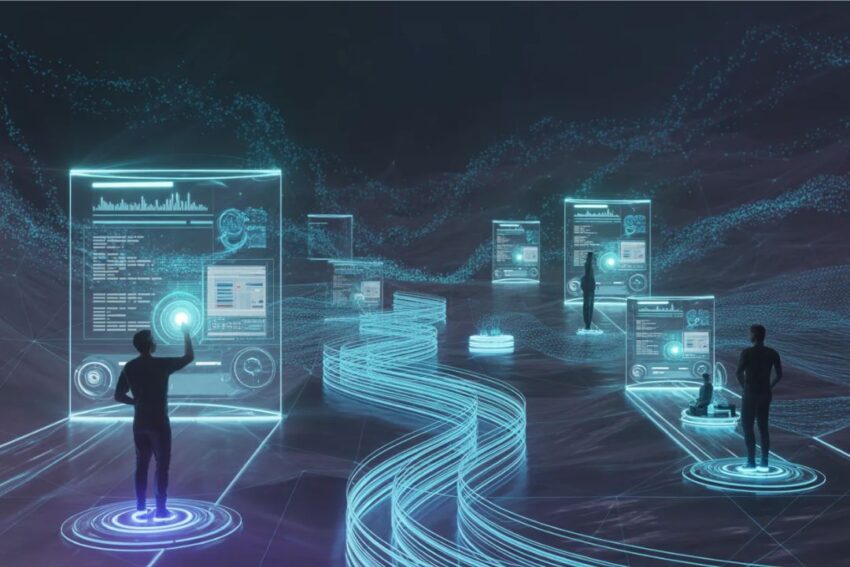
The digital landscape is evolving at an unprecedented pace. As we move further into the 2020s, next-generation technologies are reshaping industries, economies, and daily life. From artificial intelligence and blockchain to quantum computing and immersive digital experiences, these innovations are not just enhancing efficiency—they are defining the future of our digital world. Businesses, governments, and individuals must understand and embrace these technologies to thrive in a rapidly changing environment. This article explores the key next-generation technologies poised to shape the digital future and their potential impact across sectors.
1. Artificial Intelligence and Machine Learning: The Core of Digital Transformation
Artificial Intelligence (AI) and Machine Learning (ML) continue to drive the evolution of digital technology. They enable systems to learn from data, make decisions, and perform tasks autonomously, fundamentally transforming industries and everyday life.
Generative AI: Creativity at Scale
Generative AI has revolutionized creative processes by producing text, images, videos, and software code autonomously. Marketing teams can now generate personalized content instantly, designers can create prototypes faster, and software developers can streamline coding tasks. This not only reduces costs and time but also expands creative possibilities beyond human limitations.
AI in Business and Operations
AI is increasingly embedded in enterprise operations:
- Predictive Analytics: Forecasting trends and customer behavior to optimize strategy.
- Automation: Streamlining repetitive tasks, freeing human talent for complex problem-solving.
- Decision Support: Analyzing vast datasets to improve decision-making accuracy.
From retail to logistics and finance, AI enhances operational efficiency, improves customer experiences, and drives innovation.
Ethical Considerations
As AI becomes more pervasive, ethical challenges arise. Issues such as bias in algorithms, privacy concerns, and autonomous decision-making require responsible governance. Transparent frameworks, ethical guidelines, and regulatory oversight are critical to ensuring AI benefits society.
2. Blockchain and Decentralized Technologies: Securing the Digital Ecosystem
Blockchain technology is transforming the way we manage data, transactions, and trust in digital systems. Its decentralized, immutable, and transparent nature makes it a key pillar of next-generation technologies.
Financial Transformation
Blockchain enables decentralized finance (DeFi), allowing peer-to-peer lending, borrowing, and transactions without intermediaries. Smart contracts automate agreements, reducing costs and enhancing security. This democratizes access to financial services, especially in underserved regions.
Supply Chain and Logistics
Blockchain ensures end-to-end transparency in supply chains. Companies can track products, verify authenticity, and prevent fraud. Industries such as pharmaceuticals, luxury goods, and agriculture are adopting blockchain to improve efficiency, accountability, and trust.
Governance and Digital Identity
Blockchain can also secure digital identities and government records. Immutable ledgers reduce corruption, prevent fraud, and empower individuals to control their personal data. In voting systems, blockchain enhances trust and transparency, enabling secure and tamper-proof elections.
3. Automation and Robotics: Redefining Industry and Productivity
Automation and robotics are reshaping the digital and physical world by streamlining operations, reducing human error, and increasing efficiency.
Industrial Automation
Smart factories equipped with AI-driven robotics can adapt production lines, perform predictive maintenance, and optimize resources in real-time. This flexibility reduces downtime, improves product quality, and allows businesses to respond quickly to market demands.
Robotic Process Automation (RPA)
RPA automates administrative and back-office processes such as invoice processing, customer service, and data management. By handling repetitive tasks, RPA frees human employees to focus on creative, strategic, and value-driven work.
Autonomous Transportation
Automation is also transforming mobility. Self-driving cars, autonomous delivery drones, and AI-powered logistics networks increase speed, reduce costs, and enhance safety. These systems are essential for the development of smart cities and intelligent transportation networks.
4. Quantum Computing: Unlocking the Next Frontier
Quantum computing is poised to revolutionize industries by solving problems beyond the capabilities of classical computers. Using principles like superposition and entanglement, quantum computers process complex computations exponentially faster.
Applications Across Sectors
- Healthcare and Pharmaceuticals: Simulating molecular structures for faster drug discovery.
- Finance: Optimizing investment portfolios and risk management strategies.
- Energy and Climate Modeling: Simulating complex systems for sustainability and efficiency.
Quantum computing, combined with AI, will enable breakthroughs in research, logistics, and decision-making, defining the next era of digital innovation.
5. Extended Reality (XR): Immersive Digital Experiences
Extended Reality (XR), which includes Virtual Reality (VR), Augmented Reality (AR), and Mixed Reality (MR), is blurring the line between physical and digital worlds.
- AR overlays digital information onto the real world, enhancing navigation, training, and retail experiences.
- VR immerses users in fully digital environments, ideal for simulations, education, and entertainment.
- MR merges physical and digital worlds for interactive, collaborative experiences.
XR is redefining how we learn, work, and interact, offering immersive, scalable, and cost-effective solutions across industries.
6. Internet of Things (IoT) and Smart Connectivity
IoT connects devices, sensors, and systems, creating real-time digital ecosystems that improve decision-making and efficiency.
- Smart Homes and Cities: IoT networks optimize energy, traffic, and safety.
- Healthcare: Wearable devices monitor vital signs and alert medical professionals in real time.
- Industrial IoT: Connected machinery reduces downtime, predicts maintenance needs, and improves efficiency.
Combined with AI, IoT enables predictive analytics, smarter operations, and seamless integration of physical and digital systems.
7. 5G, 6G, and High-Speed Digital Networks
Next-generation connectivity is critical for the digital future. 5G networks provide ultra-low latency, high-speed data transfer, and massive device connectivity, enabling advanced applications in AI, IoT, and XR.
Impacts of High-Speed Networks
- Autonomous vehicles communicate with infrastructure in real-time for safer transportation.
- Remote collaboration and XR experiences become seamless.
- Factories and supply chains integrate IoT devices at scale, enhancing efficiency.
Looking ahead, 6G will enable intelligent, predictive networks, creating global digital ecosystems that are faster, smarter, and more resilient.
8. Cybersecurity and Digital Trust
As digital ecosystems expand, security and trust become paramount. Emerging technologies must be protected from threats while maintaining user confidence.
- AI-Driven Cybersecurity: Detects and responds to threats in real-time.
- Blockchain Security: Provides tamper-proof records for sensitive transactions.
- Privacy-Preserving Computing: Techniques like homomorphic encryption allow computation on encrypted data without revealing sensitive information.
Digital trust is essential for adoption of AI, IoT, and other next-generation technologies.
9. Sustainable and Green Technologies
The digital future is intertwined with sustainability. Emerging tech innovations are helping industries reduce environmental impact and optimize resource use.
- Smart Grids and Energy Management: AI optimizes energy distribution and consumption.
- Renewable Energy Technologies: Advanced solar, wind, and storage solutions increase efficiency.
- Green Manufacturing: Automation and IoT reduce waste and energy consumption.
Sustainable digital technologies are critical for achieving global climate goals while driving economic growth.
10. Biotechnology and Health Tech
Biotech and health tech innovations are redefining healthcare delivery and research.
- Personalized Medicine: AI analyzes genetic data to tailor treatments to individual patients.
- Remote Healthcare: Telemedicine and wearable devices expand access to medical services.
- Robotic Surgery: AI-powered precision robotics enhance surgical outcomes.
The combination of AI, IoT, and biotech will create more efficient, accurate, and accessible healthcare systems, improving quality of life worldwide.
11. Challenges in Adopting Next-Generation Technologies
Despite their potential, next-generation technologies face challenges:
- High Implementation Costs: Advanced infrastructure, talent, and systems require significant investment.
- Workforce Reskilling: New skills are needed to manage AI, automation, and quantum systems.
- Ethical and Regulatory Considerations: AI bias, data privacy, and autonomous decision-making require governance frameworks.
- Cybersecurity Threats: Expanding digital ecosystems increase vulnerability to attacks.
Addressing these challenges requires collaboration between governments, businesses, and educational institutions, ensuring technology adoption is responsible and inclusive.
12. Preparing for the Digital Future
To thrive in a rapidly evolving digital landscape, individuals and organizations must:
- Invest in Continuous Learning: Develop expertise in AI, blockchain, automation, and XR.
- Foster Innovation and R&D: Encourage experimentation with emerging technologies.
- Prioritize Ethical and Sustainable Practices: Balance innovation with societal and environmental responsibility.
- Collaborate Globally: Share knowledge, standards, and best practices to maximize impact.
Proactive preparation will ensure that the digital future is inclusive, innovative, and resilient.
Conclusion
Next-generation technologies are defining the digital future, transforming industries, economies, and daily life. AI, blockchain, automation, quantum computing, XR, IoT, and high-speed networks are not just tools—they are catalysts for new business models, smarter operations, and connected ecosystems.
The successful integration of these technologies requires strategic planning, workforce readiness, ethical governance, and sustainability. Organizations and individuals who embrace these innovations thoughtfully will lead the digital future, creating a world that is smarter, faster, and more connected than ever before.
The next decade promises unparalleled opportunities for those ready to harness the potential of next-generation technologies. By understanding and adapting to these innovations today, we are shaping the digital world of tomorrow.